Original text here from Patrice Bernard (LinkedIn)
South Africa’s Discovery Limited has long been known for its coaching-based applications, first in healthcare and later in financial well-being. It is now applying the same principle to driving—and taking a decisive step beyond traditional, and regrettably passive, behavior-scoring solutions.
At its core, the company’s telematics system initially looks similar to others worldwide. By combining a sensor that collects vehicle data with a mobile application that extracts insights about the policyholder’s driving behavior—particularly risk-taking—it delivers a well-argued assessment. Depending on the results, users receive rewards in the form of vouchers (rather than the more common premium discounts).
The model is sound, but it suffers from two major drawbacks. First, adoption rates are typically limited—no one seems to fully understand why, although reluctance toward perceived intrusion into a private sphere may play a role. Second—and this is precisely what the “Advanced Driving Instructor” aims to address—it merely presents the situation to the user without offering concrete, actionable guidance on how to improve, beyond a few generic suggestions.
Subscribe to our newsletter:
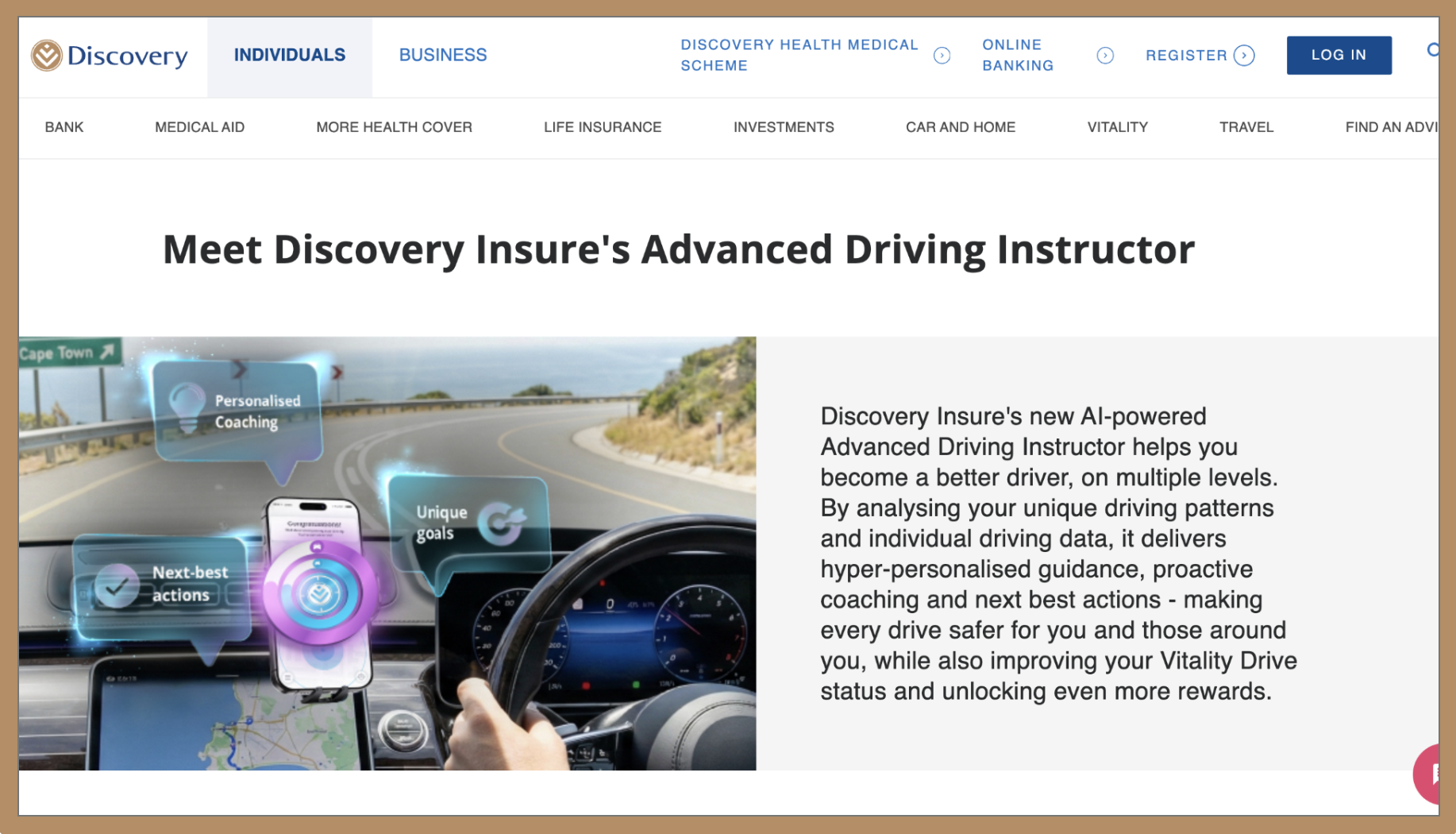
Discovery’s virtual companion is therefore designed to provide personalized, practical advice based on each driver’s habits, identified over time. In an initial approach infused with a touch of gamification, users are invited to complete missions specifically designed to correct everyday driving flaws. Progress is automatically measured during subsequent trips and rewarded accordingly.
The tool also tackles another major source of danger: location-specific driving mistakes. These include, for example, inattention at a consistently empty intersection on a daily commute or habitual speeding through a particular sharp bend. Such geographic patterns are analyzed and handled with special care. As drivers approach these zones, “friendly” voice alerts are triggered to encourage extra caution.
By extending the same rigorous logic behind its other coaching services, Discovery promotes a pedagogical model that goes beyond simply reporting behavior. Instead of leaving customers to interpret feedback on their own, it actively guides them, making it as easy as possible to implement meaningful improvements. Although still rarely deployed in the industry, this hands-on approach is a critical component of effective customer support—and, if early feedback is any indication, it is being well received.